Buying
Updated · First published
What Cities Make Up the Niagara Region?
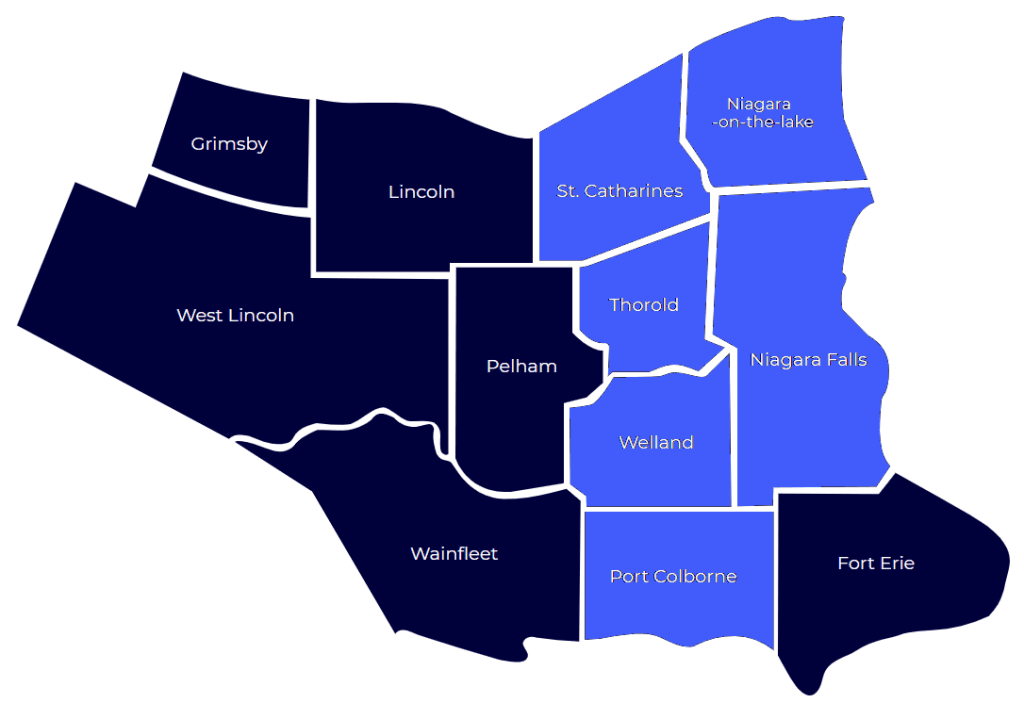
The Niagara Region is made up of 12 municipalities: five cities, five towns and two townships. Together they had 477,941 residents in the 2021 Census, and the regional government (the Regional Municipality of Niagara) has its headquarters in Thorold.
All 12 Niagara municipalities at a glance
Ranked by population, 2021 Census (Statistics Canada):
- St. Catharines (city): 136,803
- Niagara Falls (city): 94,415
- Welland (city): 55,750
- Fort Erie (town): 32,901
- Grimsby (town): 28,883
- Lincoln (town): 25,719
- Thorold (city): 23,816
- Port Colborne (city): 20,033
- Niagara-on-the-Lake (town): 19,088
- Pelham (town): 18,192
- West Lincoln (township): 15,454
- Wainfleet (township): 6,887
Cities: St. Catharines, Niagara Falls, Welland, Thorold and Port Colborne. Towns: Fort Erie, Grimsby, Lincoln, Niagara-on-the-Lake and Pelham. Townships: Wainfleet and West Lincoln.
How the Niagara Region works
Niagara covers most of the Niagara Peninsula, between Lake Ontario to the north, Lake Erie to the south and the Niagara River (the border with New York State) to the east. Hamilton and Haldimand County border it to the west but are not part of it.
The region was created in 1970, when the old counties of Lincoln and Welland were merged. Those county names are history now; today Niagara has two levels of local government. Each of the 12 municipalities runs things like local roads, parks, zoning and property-tax billing, while the Region handles shared services such as water and wastewater, waste collection, public health, regional roads and the Niagara Regional Police.
St. Catharines
Population: 136,803 (2021 Census). Type: city.
Niagara's largest city and its main business and shopping centre, nicknamed "The Garden City" for its parks and gardens. It is home to Brock University, the Welland Canal Museum at Lock 3, the lakefront village of Port Dalhousie, the Royal Canadian Henley Regatta on Martindale Pond, and the FirstOntario Performing Arts Centre and Meridian Centre downtown. Neighbourhoods range from older homes in the downtown core to newer subdivisions in the north end and along the escarpment.
See homes for sale in St. Catharines
Niagara Falls
Population: 94,415 (2021 Census). Type: city.
Home to the Horseshoe Falls and one of Canada's busiest tourist areas, with Clifton Hill, the Fallsview casino district and the Niagara Parks gardens and trails along the river. Away from the tourist strip it is a big residential city, with established neighbourhoods near the Niagara River and fast-growing subdivisions in the south and west ends.
See homes for sale in Niagara Falls
Buying a home in Niagara?
Download our free Buyer's Guide — financing, offers, inspections, and closing, explained step by step.
Download the Buyer's GuideWelland
Population: 55,750 (2021 Census). Type: city.
Known as "The Rose City", Welland grew up around the Welland Canal. The old canal channel through the city is now a recreational waterway, and the Welland International Flatwater Centre hosts rowing and paddling events, including the 2022 Canada Summer Games. Niagara College's Welland campus is here, and the city's homes are generally among the more affordable in Niagara.
Fort Erie
Population: 32,901 (2021 Census). Type: town.
At the southeast corner of the region where the Niagara River meets Lake Erie, Fort Erie is connected to Buffalo by the Peace Bridge. It is known for Historic Fort Erie, the Fort Erie Race Track, and Lake Erie beach communities such as Crystal Beach and Ridgeway.
See homes for sale in Fort Erie
Grimsby
Population: 28,883 (2021 Census). Type: town.
Niagara's westernmost town on the QEW, a short drive from Hamilton, which makes it popular with commuters. It sits between Lake Ontario and the Niagara Escarpment, with the Bruce Trail above town and the colourful Victorian cottages of Grimsby Beach by the lake.
Lincoln
Population: 25,719 (2021 Census). Type: town.
Lincoln takes in Beamsville, Vineland and Jordan, at the heart of the Twenty Valley wine country. It is home to Ball's Falls Conservation Area, the historic village of Jordan and dozens of wineries, along with tender-fruit farms and the Vineland Research and Innovation Centre.
Thorold
Population: 23,816 (2021 Census). Type: city.
Thorold is the seat of the Niagara Region government and the best place to watch ships climb the escarpment: the Welland Canal's twin flight locks and the Lock 7 viewing complex are here. Its closeness to Brock University makes it popular with students and investors, and new subdivisions in Thorold South and Rolling Meadows have added many newer homes.
Port Colborne
Population: 20,033 (2021 Census). Type: city.
The Lake Erie end of the Welland Canal. Port Colborne is known for its canal-side downtown, its summer Canal Days festival, Nickel Beach and the Sherkston Shores area, and for lakefront and rural properties at prices below most of north Niagara.
See homes for sale in Port Colborne
Niagara-on-the-Lake
Population: 19,088 (2021 Census). Type: town.
The first capital of Upper Canada and one of Ontario's best-preserved 19th-century towns, at the mouth of the Niagara River. It is home to the Shaw Festival, Fort George and much of Niagara's wine country, and also includes the communities of Virgil, St. Davids, Queenston and Glendale. It has some of the highest home prices in the region.
See homes for sale in Niagara-on-the-Lake
Find the right home with confidence.
Our free Buyer's Guide covers everything from mortgage pre-approval to moving day, tailored to the Niagara market.
Get Your Free Buyer's GuidePelham
Population: 18,192 (2021 Census). Type: town.
A quiet, family-oriented town in the centre of the region, made up of Fonthill, Fenwick, Ridgeville and North Pelham. It is known for rolling, wooded countryside, orchards, the Steve Bauer Trail and the Meridian Community Centre, and for larger lots than in the bigger cities.
West Lincoln
Population: 15,454 (2021 Census). Type: township.
A largely rural township in the west of the region, with Smithville as its main community. It is farm country, with hamlets such as Caistorville, St. Anns and Wellandport, and Smithville is planned to grow, so you'll find both newer homes in town and acreages outside it.
See homes for sale in West Lincoln
Wainfleet
Population: 6,887 (2021 Census). Type: township.
Niagara's smallest municipality by population, on the Lake Erie shore west of Port Colborne. Wainfleet is rural and agricultural, with lakefront cottages and homes at Long Beach and along the shoreline, and the Wainfleet Bog conservation area inland.
See homes for sale in Wainfleet
Thinking about moving to Niagara?
Every one of these 12 municipalities has its own feel and price range. The Davids & DeLaat team has sold homes across all of them. Browse every Niagara MLS® listing, explore our Niagara community guides, or check the latest Niagara market report.
Population figures are from the Statistics Canada 2021 Census of Population. Results from the 2026 census are expected starting in 2027.
Frequently asked questions
How many municipalities are in the Niagara Region?
Twelve: five cities (St. Catharines, Niagara Falls, Welland, Thorold and Port Colborne), five towns (Fort Erie, Grimsby, Lincoln, Niagara-on-the-Lake and Pelham) and two townships (Wainfleet and West Lincoln).
What is the largest city in the Niagara Region?
St. Catharines, with 136,803 residents in the 2021 Census. Niagara Falls is second with 94,415, and Welland third with 55,750.
What is the difference between a city and a town in Niagara?
Mostly history and size. Whether a place is called a city, town or township is a name the municipality holds under Ontario law; all 12 are lower-tier municipalities with the same basic responsibilities, and they all share regional services such as water, waste collection, public health and the Niagara Regional Police.
What is the population of the Niagara Region?
477,941 in the 2021 Census, up 6.7% from 2016. The 2026 census was taken in May 2026; its population counts are expected in 2027.
Is Hamilton part of the Niagara Region?
No. Hamilton is a separate single-tier city that borders Niagara to the west, as does Haldimand County. Grimsby and West Lincoln are the Niagara municipalities closest to Hamilton.